Explore what languages do they speak in Egypt and see how language shapes everyday life and travel experiences. At first glance, it may seem simple, but Egypt offers a rich mix of Arabic, English, and historical influences. Whether you’re visiting museums, temples, or local markets, understanding how people communicate makes your journey smoother. This guide shows you what to expect and how to connect with locals across Egypt.
What languages do they speak in Egypt and why it matters for travelers
Understanding what languages do they speak in Egypt is one of the simplest ways to make your trip smoother and more enjoyable. While many travelers focus on monuments and attractions, communication plays a big role in how you experience daily life—from ordering food to asking for directions or speaking with local guides.
Egypt is primarily an Arabic-speaking country, but the situation is more flexible than many expect. In tourist areas like Cairo, Luxor, and the Red Sea resorts, English is widely understood, especially in hotels, restaurants, and guided tours. This means most visitors can travel comfortably without knowing Arabic, yet learning a few basic words can completely change your interactions.
Many visitors are surprised to see how welcoming locals become when you try simple phrases. Even a small effort can lead to better service, friendly conversations, and more authentic experiences. Because of this, language is not just about communication—it becomes part of the cultural connection that makes traveling in Egypt truly memorable.
What Is the Official Language Spoken in Egypt
The official language spoken in Egypt is Arabic, specifically Modern Standard Arabic, which is used in government, education, media, and formal communication. You will see it on road signs, official documents, newspapers, and even museum descriptions across the country. However, many travelers quickly notice that the spoken language can feel quite different from what is written.
In everyday situations, locals use Egyptian Arabic, a dialect that has its own rhythm and expressions. This is what you will hear in markets, taxis, and casual conversations. Still, the official form of Arabic remains important because it connects the country through a shared standard language.
For visitors, this might sound complex at first, but in reality, communication is quite easy in tourist areas. Guides, hotel staff, and tour operators often speak English alongside Arabic. For example, during sea excursions like the Hurghada Dolphin House trip, instructions and conversations are usually explained in multiple languages to make the experience smooth and comfortable.
Because of this mix, Egypt feels both traditional and accessible at the same time, making it easier for travelers to explore with confidence.
What Language Do Egyptians Speak in Daily Life?
In daily conversations, what languages do they speak in Egypt becomes much clearer once you arrive and start interacting with locals. The answer is simple—most Egyptians speak Egyptian Arabic in their everyday lives. This dialect is different from the formal Arabic taught in schools, and it has its own expressions, tone, and rhythm that make it unique.
Walking through a busy street in Cairo or exploring local markets in Luxor, you will hear this version of Arabic everywhere. It’s the language of daily life—used between friends, families, shopkeepers, and taxi drivers. Many travelers notice that even if they learned a few standard Arabic phrases, locals often respond in a more relaxed and familiar style.
Interestingly, Egyptian Arabic is widely understood across the Arab world because of Egyptian movies, music, and media. This makes it one of the most recognizable dialects in the region. For visitors, this means you’re hearing a living, evolving language that reflects both history and modern culture, not just a formal system taught in books.
Egyptian Arabic
Egyptian Arabic is the true voice of everyday life in Egypt, and it’s what you will hear most during your travels. While formal Arabic exists in books and official settings, this dialect is used in conversations, street interactions, and local experiences. It may sound different from what you expect, but that’s part of its charm—it feels natural, expressive, and full of personality.
Many travelers first notice Egyptian Arabic while speaking with guides, drivers, or shop owners. It’s also the language you’ll hear during popular excursions. For example, on trips like Orange Bay Hurghada, guides often switch between Egyptian Arabic and English to communicate with visitors, creating a relaxed and friendly atmosphere throughout the journey.
One interesting thing is that Egyptian Arabic is widely understood across the Middle East because of Egyptian films and music. This makes it one of the most influential dialects in the region. As you explore places like Cairo or walk near ancient temples in Luxor, you’re not just hearing a language—you’re experiencing a living cultural identity that connects modern Egypt to its rich and diverse past.
Modern Standard Arabic (MSA) in Egypt
Modern Standard Arabic (MSA) plays a formal but important role when discussing what languages do they speak in egypt. It is the version of Arabic used in schools, official documents, news broadcasts, and written communication across the country. While you may not hear it often in casual conversations, you will see it everywhere—from street signs to museum descriptions and historical explanations.
Many travelers first encounter MSA when visiting major sites like the Egyptian Museum in Cairo or reading information inside temples in Luxor. It may look complex at first, but it represents a unified form of Arabic understood across different Arab countries. This is why it’s still widely used in formal situations, even though locals prefer dialects in daily life.
One interesting detail is that guides often switch between Egyptian Arabic and MSA depending on the situation. When explaining history or reading inscriptions, they may use more formal language, especially in cultural or educational settings. This balance between formal and spoken Arabic reflects Egypt’s unique linguistic identity, where tradition and everyday life exist side by side.
Understanding Egypt’s Arabic Variations and Dialects
Arabic in Egypt is not just one single form—it’s a mix of regional dialects that change depending on where you are. From the busy streets of Cairo to the villages of Upper Egypt, the way people speak can sound slightly different in tone, pronunciation, and even vocabulary. This variation is part of what makes the country’s culture feel so rich and alive.
Most travelers first notice this when moving between cities. A conversation in Alexandria may feel softer, while speech in southern regions can sound stronger and more traditional. Despite these differences, Egyptian Arabic remains widely understood across the country, making communication easier than expected.
For visitors exploring coastal destinations, you may hear even more diversity. On trips like Hurghada Mahmya Island, guides often adjust their language depending on the group, blending dialect with clear, simple Arabic or English. This flexibility helps travelers feel comfortable while still experiencing the authentic sound of local speech.
Because of this variety, language in Egypt is not fixed—it reflects geography, history, and daily life, giving each region its own unique voice.
What Language Is Spoken in Cairo and Major Cities?
In large urban areas, what languages do they speak in egypt becomes even more interesting because cities like Cairo, Alexandria, and Giza are full of linguistic variety. The main language you will hear is Egyptian Arabic, but the way it’s spoken in cities is often faster, more modern, and influenced by media, tourism, and daily interaction with foreigners.
Walking through Cairo, many travelers notice how easily people switch between Arabic and English, especially in shops, restaurants, and transportation. This is why communication in major cities feels much easier compared to rural areas. The cairo egypt language experience is dynamic—you might hear Arabic in one moment, then English phrases mixed into the conversation the next.
In tourist zones near famous landmarks like the pyramids or the Egyptian Museum, guides and vendors are used to international visitors. Because of this, language becomes flexible and practical rather than strictly traditional. This mix makes big cities in Egypt not only easier to navigate but also more engaging, as you experience both local culture and global communication at the same time.
Is English Spoken in Egypt?
Yes, English is widely spoken in Egypt, especially in areas connected to tourism, which makes traveling much easier than many visitors expect. In hotels, restaurants, airports, and guided tours, you will usually find staff who can communicate clearly in English. This is particularly true in popular destinations like Cairo, Luxor, and Red Sea resorts.
Many travelers notice this quickly when joining excursions. For example, during trips like Hurghada Paradise Island, guides often explain activities, safety instructions, and schedules in English to ensure everyone understands. This creates a relaxed and comfortable experience, even for first-time visitors to Egypt.
However, outside tourist zones, English may be more limited. In local neighborhoods or traditional markets, communication might rely more on gestures, simple phrases, or basic words. Even so, Egyptians are known for being helpful and patient, often finding ways to communicate.
Because of this balance, English acts as a bridge for travelers, making it easy to explore Egypt while still experiencing the authenticity of local language and culture.
English in Egypt.
When exploring what languages do they speak in Egypt, English stands out as one of the most useful languages for travelers. It is not the official language, but it plays a major role in tourism, business, and education. In many situations, especially in cities and tourist destinations, you can rely on English to communicate easy without any major difficulty.
Many visitors are surprised by how often they hear English while traveling through Egypt. From airport signs to hotel receptions and guided tours, English is commonly used to assist international guests. In places like Luxor temples or Cairo museums, guides often explain historical details in clear English, making ancient stories easy to understand.
Even in casual situations, such as ordering food or asking for directions, basic English is often enough. Younger generations, in particular, tend to speak it more confidently due to education and exposure to global media. Because of this, travelers can focus more on enjoying the experience rather than worrying about communication barriers, while still hearing and experiencing the local Arabic culture all around them.
French and German in Egypt.
French and German are also spoken in Egypt, mainly in tourist areas where visitors from Europe travel frequently. While they are not as widely used as English, you will still hear them in hotels, tour companies, and popular destinations along the Red Sea and in historical cities like Luxor and Aswan.
Many travelers are surprised to meet guides who can switch between multiple languages depending on the group. In places like Hula Hula Island Hurghada, tour guides often explain activities in German or French, especially when groups arrive from Europe. This creates a more comfortable and personalized experience for visitors who prefer their native language.
French has a longer historical presence in Egypt, especially in education and cultural institutions, while German has become more common due to tourism demand. Because of this, multilingual communication is part of the travel experience, particularly in well-developed tourist zones.
Although you don’t need to speak either language to visit Egypt, their presence highlights how international the country has become, making it easier for travelers from different backgrounds to feel welcome and understood.
Top Foreign Languages Spoken in Egypt
Looking beyond Arabic, what languages do they speak in Egypt also includes several foreign languages that reflect the country’s strong connection to global tourism and international business. English is by far the most common, but it is not the only one you will encounter during your trip.
In many tourist destinations, especially along the Red Sea and in historical cities, you may hear German, French, Italian, and even Russian. This diversity comes from the wide range of visitors Egypt receives every year. Tour guides, hotel staff, and even shop owners often learn multiple languages to communicate easily with travelers.
Many visitors are surprised when a guide switches smoothly between two or three languages during the same tour. This happens frequently in places like Luxor temples or Nile cruises, where groups from different countries travel together. It creates a welcoming atmosphere and helps everyone understand the history and experience more deeply.
Because of this multilingual environment, Egypt feels very accessible to international travelers, allowing people from different cultures to explore the country comfortably while still experiencing its authentic local identity.
How Many Languages Are Spoken in Egypt?
Egypt is home to more linguistic diversity than many travelers expect. While Arabic is the dominant language, several other languages are spoken across the country due to history, regional identity, and tourism. In reality, Egypt is not a single-language country—it is a blend of languages that reflect both its ancient past and modern global connections.
Most visitors encounter this diversity during their trips. For example, on excursions like Magawish Island Hurghada, you may hear guides switching between Arabic, English, and sometimes even German or French depending on the group. This shows how flexible communication has become in tourist areas.
Beyond tourism, minority languages such as Nubian in the south and Siwi in the western desert are still spoken within local communities. These languages are part of Egypt’s cultural heritage and continue to be used in daily life among specific groups.
So while the main answer may seem simple at first, Egypt actually offers a rich mix of languages that make travel more interesting and culturally immersive for anyone exploring the country.
Minority Languages and Regional Diversity
Egypt’s linguistic landscape goes far beyond Arabic, and understanding what languages do they speak in Egypt means looking at its regional diversity. Across the country, especially outside major cities, smaller communities continue to speak their own traditional languages, each connected to a unique cultural identity.
In southern Egypt, near Aswan, Nubian communities still use their native language in daily life. In the western desert, particularly around the Siwa Oasis, the Siwi language is spoken among locals. These languages are not widely used across the country, but they remain an important part of Egypt’s cultural heritage.
Many travelers don’t realize this diversity until they visit these regions. When you explore villages or travel beyond typical tourist routes, you may notice differences not only in language but also in traditions, clothing, and lifestyle. It adds a deeper layer to the travel experience.
This regional variation shows that Egypt is not linguistically uniform. Instead, it is a country where history, geography, and community have shaped a rich mix of languages that still exist alongside modern Arabic today.
Saidi Arabic in Egypt
Saidi Arabic is one of the most distinctive regional dialects in Egypt, mainly spoken in Upper Egypt, including cities like Luxor, Aswan, and surrounding villages. It represents an important part of the language of egypt, offering a deeper look into how speech changes across regions. While it is still Arabic, the pronunciation, vocabulary, and rhythm can feel quite different from the Egyptian Arabic spoken in Cairo.
Many travelers first notice this difference when they move south along the Nile. Conversations may sound stronger or more traditional, and in some cases, even native Arabic speakers from other regions need time to fully understand it. Despite this, locals are very welcoming and often adjust their speech when speaking with visitors.
If you visit historical sites like the Valley of the Kings or walk through local markets in Luxor, you are likely to hear Saidi Arabic naturally used in daily life. This adds an authentic cultural layer to the experience, making your journey feel more connected to the local community. It’s not just a dialect—it reflects the history, identity, and traditions of Upper Egypt.
The Nubian language in Egypt
The Nubian language is one of the oldest and most culturally rich languages still spoken in Egypt today. It is mainly used by Nubian communities living in southern Egypt, especially around Aswan and along the Nile. While Arabic is the dominant language nationwide, Nubian continues to be an important part of local identity and daily life in these regions.
When exploring what languages do they speak in Egypt, many travelers are surprised to discover Nubian culture. In villages near Aswan, you may hear this language spoken at home, in local gatherings, and during cultural celebrations. It sounds completely different from Arabic, with its own structure and history that goes back thousands of years.
Visiting Nubian villages offers a unique experience. Colorful houses, traditional music, and friendly conversations give you a deeper connection to Egypt beyond the usual tourist routes. Even if you don’t understand the language, you can feel its importance in preserving heritage and community traditions.
Because of this, the Nubian language is not just a way of speaking—it is a living link to ancient cultures that still exist in modern Egypt today.
Egypt’s Siwi language
Egypt’s Siwi language is one of the country’s most unique and lesser-known languages, spoken mainly in the remote Siwa Oasis in the Western Desert. It belongs to the Berber language family and is completely different from Arabic in both sound and structure. This makes it a fascinating example of Egypt’s cultural diversity beyond the main cities and tourist routes.
When exploring Egyptian hieroglyphics and ancient communication systems, many travelers don’t expect to find living languages like Siwi still in use today. In Siwa, locals use this language in daily conversations, especially within families and traditional communities, while also speaking Arabic when interacting with visitors.
Visiting Siwa feels like stepping into a different world. The pace is slower, traditions are deeply preserved, and language plays a key role in maintaining this identity. Even simple greetings in Siwi can create meaningful connections with locals, showing respect for their heritage.
Because of this, the Siwi language is more than just a way of speaking—it represents a living cultural treasure that continues to survive in one of Egypt’s most isolated and beautiful regions.
Other Languages Spoken in Egypt
Beyond Arabic and well-known minority languages, what languages do they speak in Egypt also includes a range of other languages influenced by tourism, education, and international communities. These languages may not be widely spoken across the entire country, but they appear in specific contexts and regions, especially where global interaction is common.
In major tourist destinations, you might hear Italian, Russian, or even Spanish, particularly in hotels and tour groups. This is because Egypt attracts visitors from all over the world, and many professionals working in tourism adapt by learning key phrases or full conversational skills in multiple languages.
There are also small expatriate communities in cities like Cairo and Alexandria, where foreign languages are used in daily life, schools, and businesses. International schools, for example, often teach in English, French, or other European languages, adding another layer to Egypt’s linguistic diversity.
Because of this, Egypt feels more multilingual than many travelers expect. While Arabic remains the foundation, the presence of these additional languages reflects the country’s role as a global travel destination where cultures and communication styles naturally come together.
What Language Was Spoken in Egypt Before Arabic?
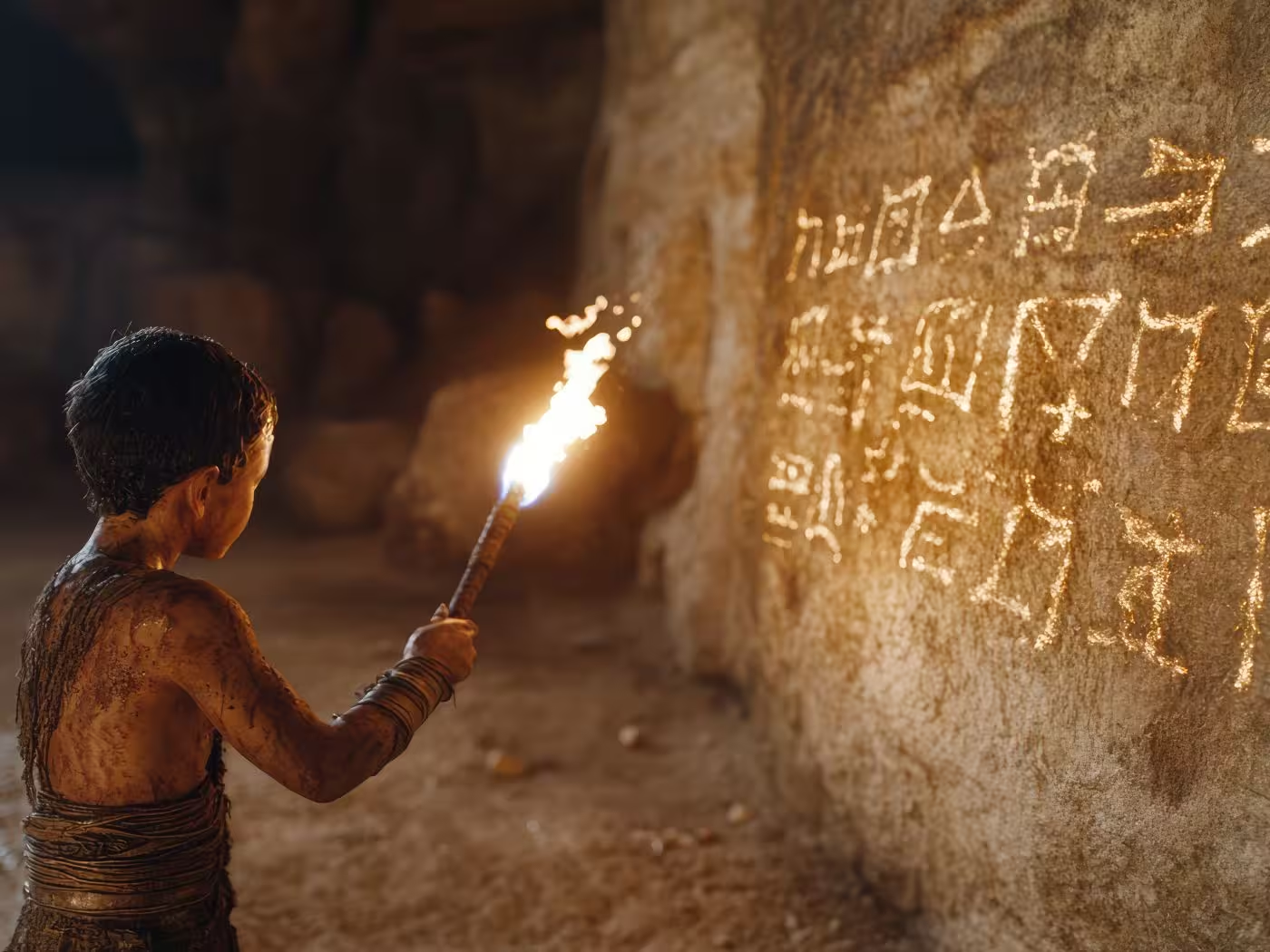
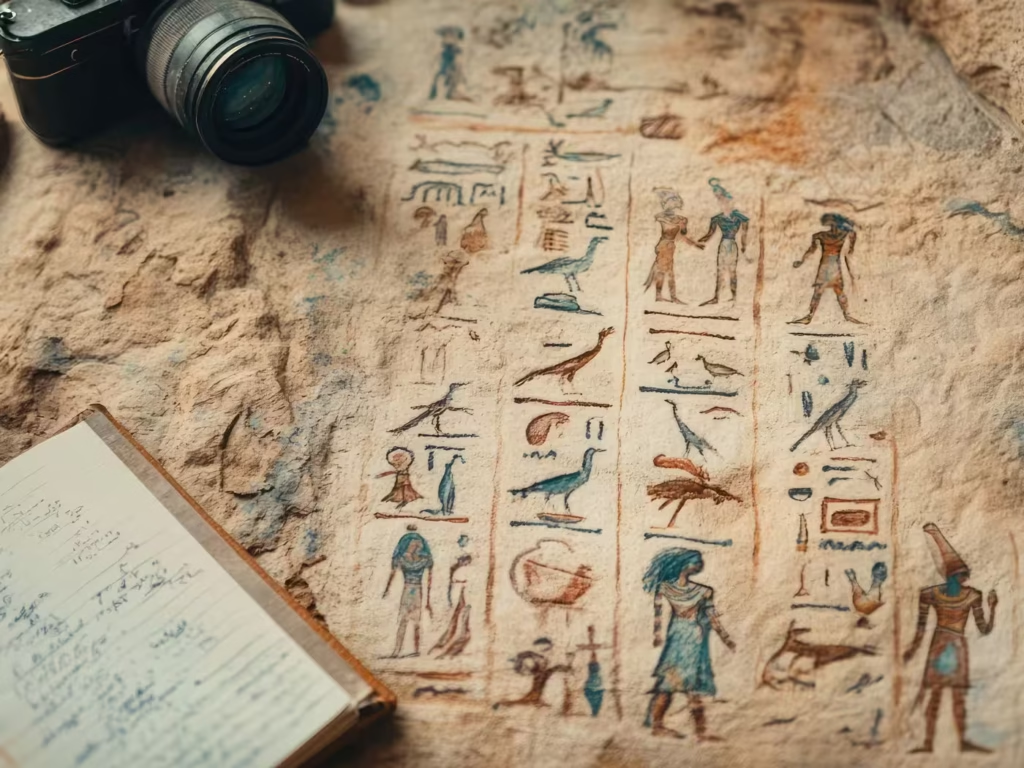
Before Arabic became dominant, the ancient egyptians language was completely different from what is spoken today. Thousands of years ago, Egyptians used their own language system, which evolved over time and was written using hieroglyphs, hieratic, and later demotic scripts. This language was used to record everything from religious beliefs to daily life, and many of these inscriptions can still be seen on temple walls and inside tombs.
When you visit places like Luxor or the Valley of the Kings, you are actually looking at this ancient language carved in stone. It may look like decorative symbols, but each sign had meaning and purpose. Historians believe this early form of communication played a key role in preserving Egypt’s history across generations.
Over time, this ancient language developed into Coptic, which was used in later periods before gradually being replaced by Arabic after the Islamic conquest. Even today, traces of this ancient system remain visible in Egypt’s culture and religious traditions.
Understanding this history adds depth to any visit, as you begin to see Egypt not just as a destination, but as a place where language has evolved over thousands of years.
History of the Ancient Egyptian Language
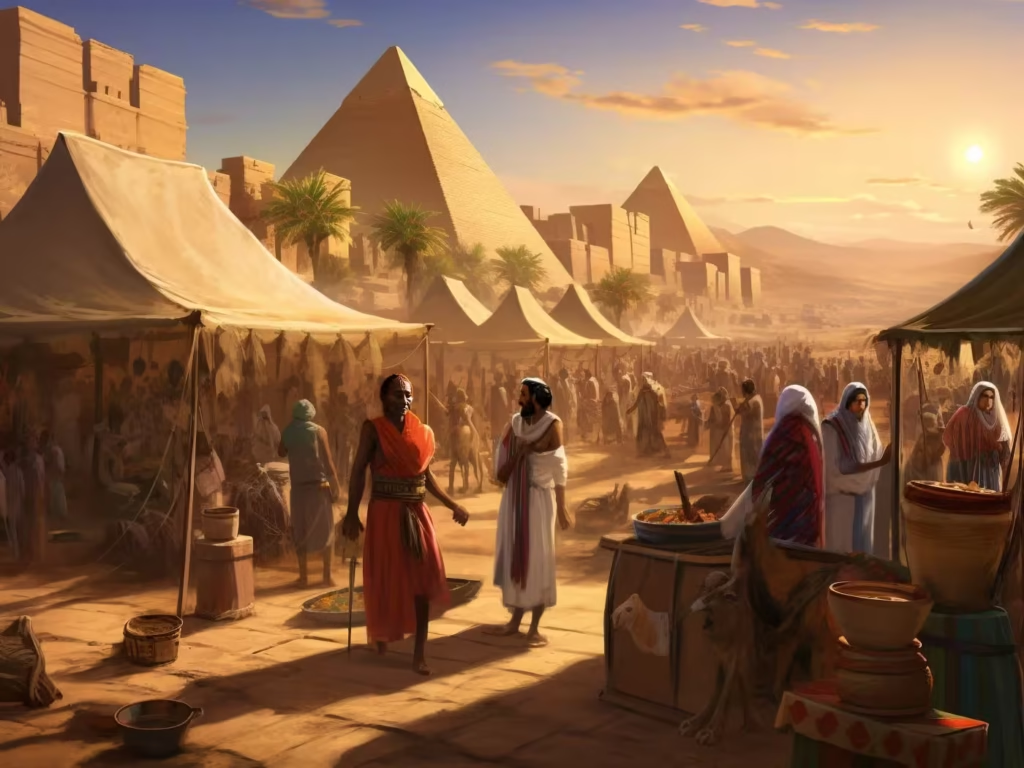
The story of what languages do they speak in Egypt cannot be complete without understanding the deep history of the ancient Egyptian language. This language dates back more than 5,000 years and is considered one of the oldest recorded languages in human civilization. It evolved through several stages, beginning with early hieroglyphic writing and later developing into hieratic and demotic scripts used for everyday purposes.
When you walk inside temples in Luxor or stand before carvings in Karnak, you are actually looking at this ancient language preserved in stone. These inscriptions recorded royal achievements, religious beliefs, and daily life, giving historians valuable insight into one of the world’s greatest civilizations.
Over time, the ancient Egyptian language gradually changed into Coptic, which became the final stage of this linguistic evolution. Although it is no longer used in daily communication, it still survives in religious contexts today.
This long history shows that language in Egypt is not just about communication—it is a timeline of civilization itself, connecting modern Egypt to a past that still speaks through its monuments and sacred texts.
Language and Hieroglyphic Writing
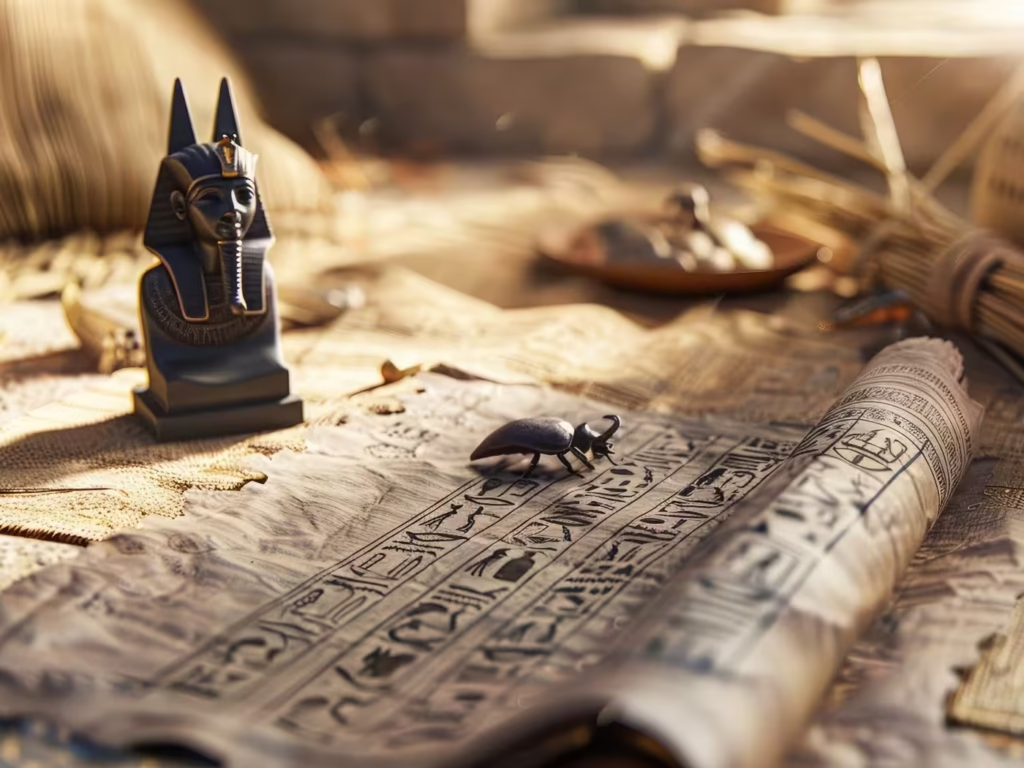
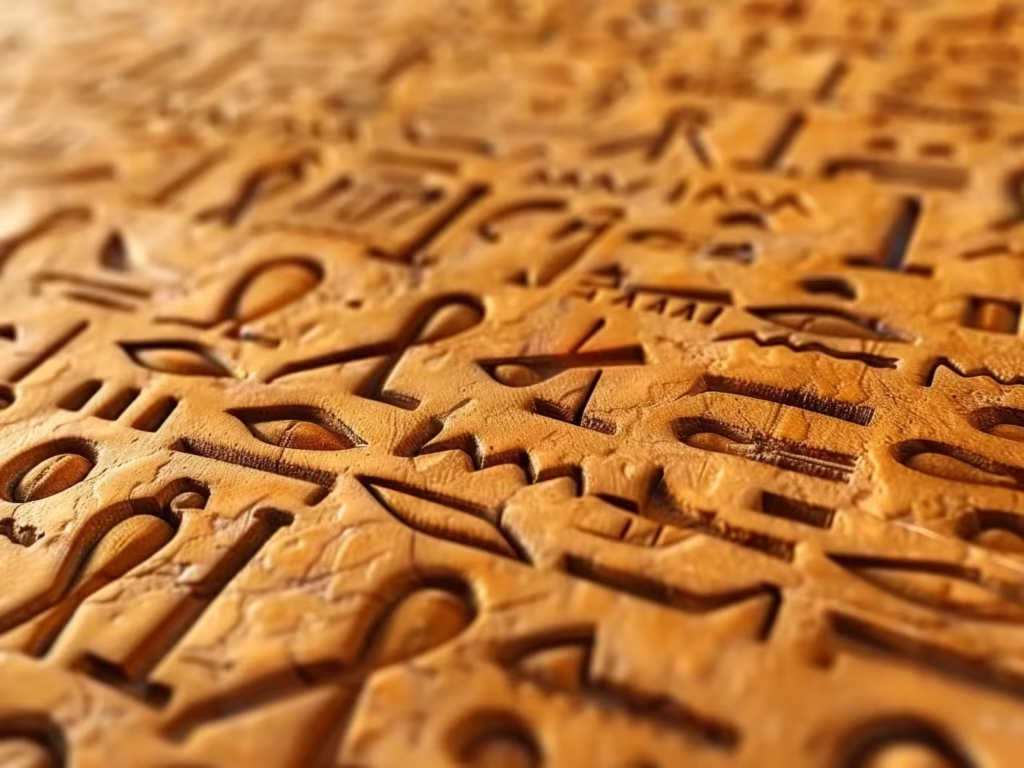
Language in ancient Egypt was not only spoken—it was visually expressed through a complex system of symbols known as hieroglyphs. When exploring the egypt alphabet in hieroglyphics, many travelers are surprised to learn that these symbols were not just pictures, but a structured writing system combining sounds, words, and meanings.
Walking through temples in Luxor or standing inside tombs in the Valley of the Kings, you can still see these carvings covering entire walls. Each symbol tells part of a story—whether it’s a pharaoh’s achievements, religious rituals, or beliefs about the afterlife. It may look decorative at first, but in reality, it was a powerful way to preserve history.
Historians believe that hieroglyphic writing was mainly used by priests and scribes, which made it both sacred and exclusive. Over time, simpler scripts developed for daily use, but hieroglyphs remained important for monuments and religious texts.
This is why, even today, visitors feel a strong connection when seeing these symbols. They are not just ancient drawings—they are the written voice of one of the world’s oldest civilizations, still visible thousands of years later.
The Legacy of the Coptic Language
The legacy of the Coptic language is a key part of understanding what languages do they speak in Egypt, especially when looking at the transition from ancient to modern times. Coptic is considered the final stage of the ancient Egyptian language, written using a modified Greek alphabet with additional symbols. It developed after the era of hieroglyphics and was widely used in Egypt during the early Christian period.
Although it is no longer spoken in daily life, Coptic still exists today in religious contexts, particularly within the Coptic Orthodox Church. Visitors attending a church service may hear prayers and hymns spoken in this ancient language, offering a rare glimpse into Egypt’s linguistic past still alive in the present.
Many travelers don’t realize that Coptic acts as a bridge between ancient Egyptian and modern Arabic. It carries elements of the old language while reflecting later cultural influences. Because of this, it holds deep historical and spiritual significance.
Even today, the legacy of Coptic reminds visitors that language in Egypt is not just evolving—it is layered, with each stage leaving a lasting mark on the country’s identity.
Coptic in Contemporary Egypt
Coptic still exists in modern Egypt, but not in the way many travelers might expect. Today, it is mainly used in religious settings rather than daily conversation. When exploring what languages do they speak in Egypt, this ancient language continues to appear inside churches, where prayers and liturgical texts are spoken in Coptic.
The writing system of Coptic is closely linked to the egypt alphabet in hieroglyphics, as it represents a later stage in the evolution of the ancient Egyptian language. While it uses Greek letters, it also includes additional symbols that reflect older Egyptian sounds. This connection makes Coptic an important key for historians trying to understand ancient texts.
Visitors who attend a Coptic church service often find the experience unique and memorable. Even if the words are unfamiliar, the sound of the language carries deep historical meaning. It feels like hearing an echo of ancient Egypt still alive today.
Because of this, Coptic remains more than a religious language—it is a cultural bridge that connects modern Egypt with its ancient linguistic heritage in a living and meaningful way.
How did Arabic get to Egypt?
Arabic became the dominant language in Egypt after the Islamic conquest in the 7th century, when Arab armies entered the country and established new political and cultural systems. Before that time, Egyptians spoke Coptic, which had developed from the ancient Egyptian language. Over the centuries, Arabic gradually replaced Coptic as the main spoken language.
When exploring what languages do they speak in Egypt, this historical shift explains why Arabic is now used everywhere—from daily conversations to official communication. It didn’t happen overnight. Instead, Arabic spread slowly through administration, trade, religion, and social interaction, eventually becoming the language most people used in everyday life.
Historians believe that religion played a major role in this transition, as Arabic became the language of Islamic texts and education. Over time, it blended with local influences, shaping the Egyptian Arabic dialect spoken today.
This transformation is one of the most important cultural changes in Egypt’s history. It shows how language can evolve with society, leaving traces of the past while creating a new identity that continues into the present.
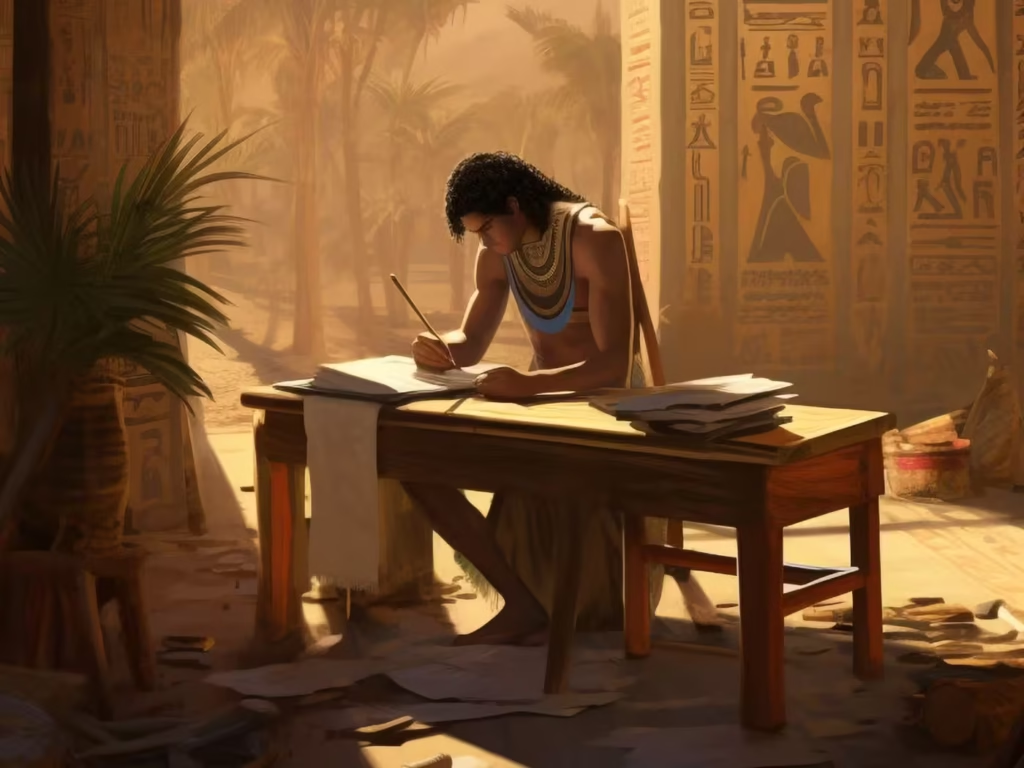
What languages do they speak in Egypt for tourists and cultural experiences
For travelers, understanding what languages do they speak in Egypt becomes especially useful when exploring different cultural experiences across the country. In most tourist areas, communication is easy thanks to the mix of Arabic and English, but the experience goes far beyond just convenience.
In places like Cairo, Luxor, and Red Sea resorts, guides often speak multiple languages to match international visitors. Whether you are visiting temples, museums, or joining island trips, explanations are usually clear and adapted to your needs. For example, during excursions to Magawish Island Hurghada, guides commonly switch between languages to ensure everyone enjoys the experience comfortably.
At the same time, travelers still hear local Arabic in markets, streets, and daily interactions, which adds authenticity to the journey. Many visitors enjoy learning a few simple phrases, as it often leads to warmer interactions with locals.
If you’re wondering Egypt speak what language in a travel context, the answer is simple: enough languages to make your trip easy, yet still deeply connected to local culture. This balance is what makes traveling in Egypt both accessible and culturally rich at the same time.