Learn What Is The Egyptian Valley Of The Kings and why it remains one of the most fascinating sites in Egypt. Set on the west bank of Luxor, this ancient valley is home to royal tombs, hidden chambers, and stunning wall art. Travelers often don’t expect how detailed it is inside. This guide will show you its secrets, history, and tips for visiting.
What Is The Egyptian Valley Of The Kings
What Is The Egyptian Valley Of The Kings is a question many travelers ask before visiting Luxor, and the answer reveals one of the most extraordinary archaeological sites in the world. This valley, hidden in the desert hills on the west bank of the Nile, served as the royal burial ground for ancient Egyptian pharaohs during the New Kingdom period. Instead of building pyramids, rulers chose to carve their tombs deep into the mountains, creating secret chambers filled with treasures, inscriptions, and detailed wall art.
When you walk through the Valley of the Kings today, it may look like a quiet, rocky landscape. But beneath the surface lies a complex network of tombs—each one designed to guide the pharaoh into the afterlife. Inside, visitors are often surprised by how vivid the colors still appear, even after thousands of years.
Historians believe this location was chosen for both security and symbolism. The surrounding cliffs resemble a natural pyramid, and the isolated desert setting helped protect royal tombs from robbers—at least for a time. Today, exploring this site offers a powerful glimpse into ancient beliefs, art, and royal life in Egypt.
Why What Is The Egyptian Valley Of The Kings Matters for Travelers
Understanding why What Is The Egyptian Valley Of The Kings matters for travelers completely changes how you experience Egypt. This is not just another historical site—it’s a place where you step directly into the world of ancient pharaohs. Many visitors arrive expecting ruins, but instead, they find detailed tombs filled with vivid wall paintings, sacred texts, and stories that still feel alive today.
What makes this site especially meaningful is how personal it feels. Unlike large temples, the tombs are enclosed spaces. When you walk inside, you follow the same corridors once prepared for kings, surrounded by artwork designed to guide them into the afterlife. It’s quiet, almost surreal, and very different from the busy atmosphere of Cairo.
For many travelers, visiting Luxor becomes the highlight of their trip because of places like this. And after exploring the valley, some choose to balance history with relaxation by heading to the Red Sea—experiences like the Magawish Island Hurghada trip offer a completely different side of Egypt, with clear waters and peaceful beaches.
This contrast is exactly why the Valley of the Kings matters. It connects Egypt’s deep past with the full travel experience visitors are looking for today.
Valley of the Kings Location
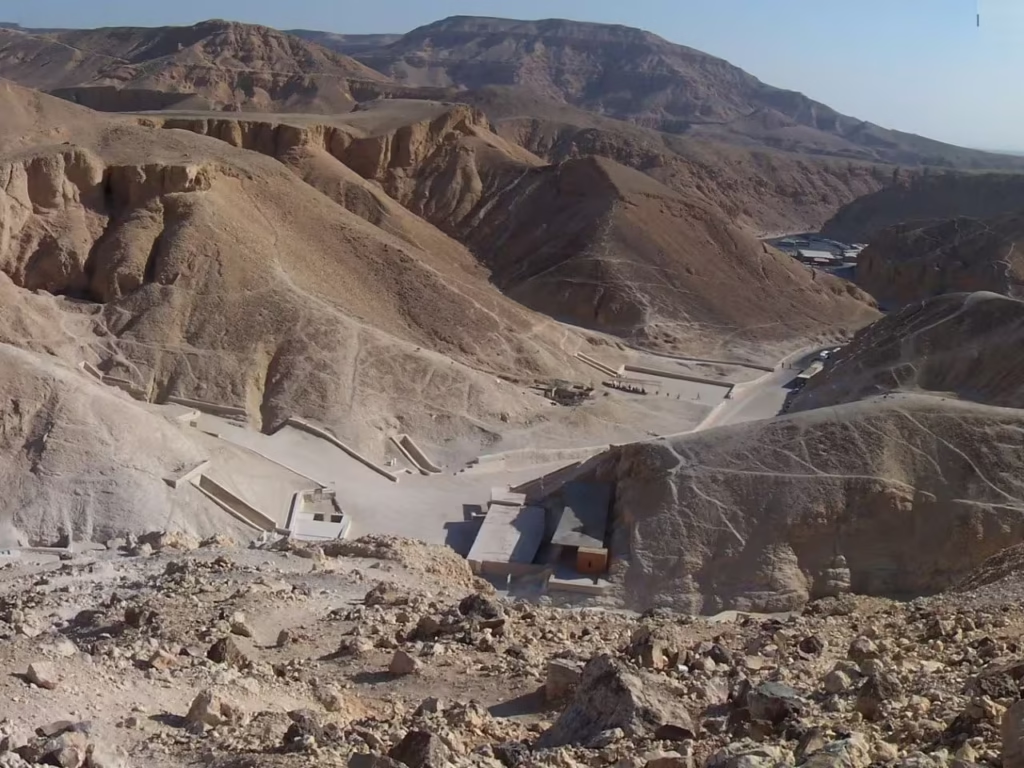
The Valley of the Kings is located on the west bank of the Nile River near Luxor, and understanding this setting helps explain What Is The Egyptian Valley Of The Kings in a much deeper way. Unlike the pyramids near Cairo, this burial site lies in Upper Egypt, surrounded by desert hills and dramatic limestone cliffs that create a naturally hidden landscape.
Most travelers don’t realize how symbolic this location is. In ancient Egyptian belief, the west was associated with death and the afterlife because it’s where the sun sets. That’s why pharaohs were buried here, facing the eternal journey beyond life. Standing in the valley today, you can see the towering peak of Al-Qurn rising above—its pyramid-like shape likely influenced the choice of this site.
Getting there is relatively easy from Luxor. It’s just a short drive or guided tour across the Nile, often combined with visits to nearby sites like the Temple of Hatshepsut or the Colossi of Memnon. When you arrive, the barren desert might seem simple at first glance, but beneath your feet lies one of the richest archaeological areas in the world.
This unique location is a key part of what makes the Valley of the Kings so unforgettable for visitors.
Valley Features
The Valley of the Kings is defined by a mix of natural beauty and hidden human craftsmanship, making it far more than just a desert landscape. At first glance, you see dry hills, narrow paths, and a quiet atmosphere—but beneath this surface lies a complex world of underground tombs carved deep into the rock.
One of the most striking features is the layout itself. The valley is divided into different sections, with tomb entrances scattered along winding paths. Each tomb leads downward through corridors, often ending in burial chambers decorated with colorful scenes from ancient Egyptian beliefs. Many visitors are surprised by how detailed and well-preserved these interiors are, especially the ceilings painted with stars and sacred symbols.
Another important feature is the isolation. The valley feels cut off from the modern world, which adds to its mysterious atmosphere. When you stand there, surrounded by cliffs, it’s easy to imagine why pharaohs chose this place for eternity.
After exploring such a historic site, some travelers like to shift to a more relaxing experience. Activities like the Hurghada Private Boat trip offer a completely different perspective of Egypt, where the focus moves from ancient tombs to the calm waters of the Red Sea, creating a balanced and memorable journey.
Historical Significance
The historical importance of this site becomes clear once you understand What Is The Egyptian Valley Of The Kings and the role it played in ancient Egypt. This valley was not just a burial ground—it marked a major shift in how pharaohs prepared for the afterlife. Instead of building massive pyramids, rulers of the New Kingdom chose hidden tombs carved deep into the mountains, aiming to protect their bodies and treasures from theft.
This decision reflects a deeper change in religious beliefs and royal strategy. Historians believe security became a growing concern after earlier tombs were looted. As a result, the Valley of the Kings was selected as a more secretive and controlled environment, where tombs could be concealed and guarded.
The site also preserves some of the most detailed examples of ancient Egyptian art and writing. Inside the tombs, walls are covered with scenes from sacred texts like the Book of the Dead, guiding the pharaoh through the afterlife. Even today, these inscriptions provide valuable insight into how ancient Egyptians viewed death, rebirth, and eternity.
For visitors, this historical depth transforms the valley from a simple attraction into a powerful connection to one of the world’s greatest civilizations.”
Why was the Valley of the Kings chosen as a burial site?
The choice of this remote desert valley was far from random—it was a carefully planned decision shaped by religion, geography, and security. Ancient Egyptians believed the west bank of the Nile was the land of the dead, where the sun disappeared each evening. Because of this, placing royal tombs here symbolized the pharaoh’s journey into the afterlife.
Another key reason was protection. Earlier pyramids, especially around Memphis and Giza, became easy targets for tomb robbers. By contrast, the Valley of the Kings offered a hidden location surrounded by cliffs and narrow entrances, making it easier to guard and conceal. Historians believe this shift was an attempt to keep royal burials safe, though many tombs were still eventually looted.
There’s also a striking natural feature—the peak of Al-Qurn, which rises above the valley and resembles a pyramid. This may have influenced the decision, offering a symbolic replacement for the traditional pyramid shape without the visibility.
Today, when visitors explore the area, they can appreciate not only the tombs themselves but the strategic thinking behind their location. After experiencing this deep history, some travelers choose to relax by the coast, where activities like the Hurghada Private Speedboat trip offer a completely different kind of Egyptian adventure.
Historical Timeline of the Valley of the Kings
The story behind What Is The Egyptian Valley Of The Kings becomes even more fascinating when you look at its timeline across ancient history. This site was mainly used during the New Kingdom period, roughly between the 16th and 11th centuries BCE, when Egypt was at the height of its power and wealth.
It all began with early pharaohs like Thutmose I, who is believed to be among the first rulers buried in this hidden valley. Over time, more kings followed, including famous names like Tutankhamun, Seti I, and Ramesses II. Each generation expanded the valley, carving deeper and more elaborate tombs into the rock.
During this period, the tomb designs evolved significantly. Early tombs were simpler, but later ones became complex networks of corridors and chambers filled with detailed inscriptions. These changes reflect shifting religious beliefs and a growing focus on the afterlife journey.
By the end of the New Kingdom, the valley was no longer used as a royal burial ground. However, its legacy remained. Even today, walking through the Valley of the Kings feels like moving through a timeline of ancient Egypt itself, where each tomb tells a different chapter of royal history.
When was the Valley of the Kings discovered?
The Valley of the Kings was never truly “lost,” but its most famous discoveries happened much later, especially in the 19th and early 20th centuries. For centuries, local people and early travelers knew of the area, and some tombs were already open and explored in ancient times. However, the real global attention came when archaeologists began systematic excavations.
The most important moment came in 1922, when British archaeologist Howard Carter uncovered the nearly intact tomb of Tutankhamun. This discovery shocked the world because, unlike many other tombs that had been looted, this one still contained treasures, artifacts, and even the king’s mummy. It changed how people understood ancient Egypt almost overnight.
Even today, the valley continues to reveal new secrets. Archaeologists are still studying hidden chambers and unexplored areas, proving that the site is far from fully uncovered. Visitors walking through the valley now are seeing only part of what lies beneath.
After exploring such a historic place, some travelers enjoy shifting to a more relaxed experience, like the Hurghada Shared Speedboat trip, where the focus moves from ancient discoveries to the beauty of the Red Sea.
Decline and Rediscovery
The decline of this royal burial site began toward the end of the New Kingdom, marking an important chapter in understanding What Is The Egyptian Valley Of The Kings. As political power weakened and economic struggles increased, maintaining and protecting the tombs became more difficult. Over time, many tombs were looted, even by those assigned to guard them, and royal mummies were later moved to hidden caches to protect what remained.
By the time ancient Egypt entered later periods, the valley had largely lost its original purpose. It became a quiet, abandoned place, known but no longer used for royal burials. Winds and desert sands slowly covered entrances, and the once-guarded secrets faded into silence.
Centuries later, interest in the Valley of the Kings returned. Early explorers, followed by archaeologists, began to rediscover tombs and document their contents. What seemed like an empty desert was revealed to be one of the richest archaeological sites in the world.
Today, visitors walking through the Valley of the Kings are witnessing both its decline and rediscovery at the same time. Some tombs show signs of damage and age, while others still display vivid artwork, reminding travelers of the valley’s lost glory and its incredible survival through history.
For travelers looking to add a completely different experience to their itinerary, combining history with the Red Sea is a great option. After exploring Luxor, you can unwind with relaxing Hurghada Shared Boat—offering snorkeling, island visits, and crystal-clear waters that perfectly complement your cultural journey.
Modern Discoveries and Conservation Efforts
Modern research in the Valley of the Kings continues to reshape what we know about ancient Egypt. Even though many tombs were discovered long ago, new technologies like ground-penetrating radar and 3D mapping are still revealing hidden structures and untouched areas. This ongoing work helps archaeologists better understand how the valley was built and how pharaohs were buried with such precision.
Conservation has also become a major focus. Many tombs suffer from humidity, flash floods, and damage caused by millions of visitors over the years. As a result, Egyptian authorities and international teams work together to restore wall paintings, stabilize corridors, and control access inside the most fragile tombs. It’s a delicate balance between preserving history and allowing people to experience it firsthand.
One interesting aspect is how Egypt connects heritage with modern tourism. While the Valley of the Kings represents ancient royal history, other parts of the country highlight natural beauty and leisure experiences. For example, many travelers heading south or along the Red Sea include activities like Hurghada Boat Trips in their itinerary, combining cultural exploration with relaxing sea adventures.
This mix of preservation and modern travel makes Egypt a destination where the past and present exist side by side, constantly evolving together.
Conservation
Conservation plays a crucial role in protecting What Is The Egyptian Valley Of The Kings, especially as the site faces increasing pressure from time, weather, and tourism. The tombs, carved deep into limestone, are incredibly fragile. Even small changes in humidity or temperature can affect the ancient paintings and inscriptions inside.
Over the years, Egypt has worked with international experts to preserve these royal burial chambers. Restoration projects often focus on cleaning wall art, reinforcing weakened structures, and controlling visitor flow to reduce damage. Some tombs are occasionally closed for long-term preservation, allowing specialists to carefully study and protect their details.
One of the biggest challenges is balancing access and protection. Travelers from all over the world come to see the valley, but each visit adds stress to these ancient spaces. Because of this, modern conservation strategies now include limited entry systems and advanced monitoring techniques.
Walking through the valley today, it’s easy to forget how delicate everything is. The colors on the walls still appear vivid, and the carvings remain sharp in many tombs, but behind the scenes, constant effort is required to keep them that way. This ongoing work ensures that future generations can continue to experience the magic and history of this extraordinary place.
Who is Buried in the Valley of the Kings?
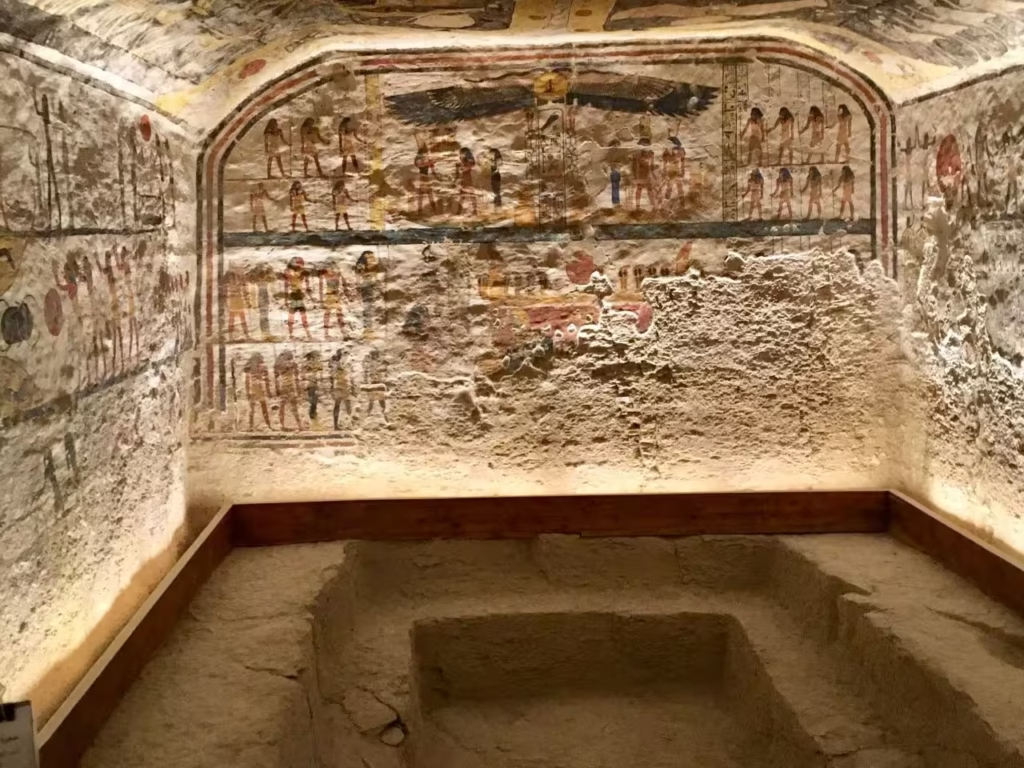
Understanding who is buried in the Valley of the Kings helps reveal What Is The Egyptian Valley Of The Kings and why it became such a powerful royal resting place. This ancient burial site is mainly home to pharaohs of the New Kingdom period, along with powerful nobles and members of the royal family who played key roles in ancient Egyptian society.
Some of the most famous rulers buried here include Tutankhamun, Seti I, and Ramesses II, each with tombs designed to reflect their status and beliefs about the afterlife. These tombs were not simple graves—they were carefully constructed underground palaces filled with corridors, burial chambers, and symbolic artwork meant to guide the soul safely into eternity.
Many travelers are surprised to learn that not every tomb belongs to a well-known king. The valley contains more than 60 discovered tombs, and some belong to lesser-known rulers or unfinished burials that still reveal important historical details.
Exploring this site gives visitors a rare opportunity to stand where ancient royalty once prepared for their journey beyond life. It feels both mysterious and personal, especially when you see the preserved colors and carvings still visible on the walls.
Notable Royal Tombs in the Valley of the Kings
Exploring the notable royal tombs helps bring What Is The Egyptian Valley Of The Kings to life in a very real and unforgettable way. This valley is not just a single monument—it is a vast collection of underground burial sites, each reflecting the power, beliefs, and artistic achievements of ancient Egyptian rulers.
Among the most famous is the tomb of Tutankhamun, discovered almost intact and filled with treasures that amazed the world. Then there is Seti I’s tomb, known for its incredible detail and long corridors decorated with religious scenes. Ramesses II, one of Egypt’s greatest pharaohs, also has connections to the valley through his family burials and legacy, showing just how important this area was to royal history.
Each tomb has its own personality. Some are deeply carved with complex passageways, while others are smaller but rich in symbolic artwork. The walls often tell stories of gods, protection spells, and the journey into the afterlife, giving visitors a glimpse into ancient Egyptian beliefs.
Walking through the valley today feels like moving through a hidden museum carved into stone. Every entrance leads to a different story, and together they form one of the most powerful historical sites in the world.
Tomb of Tutankhamun (King Tut) – KV62
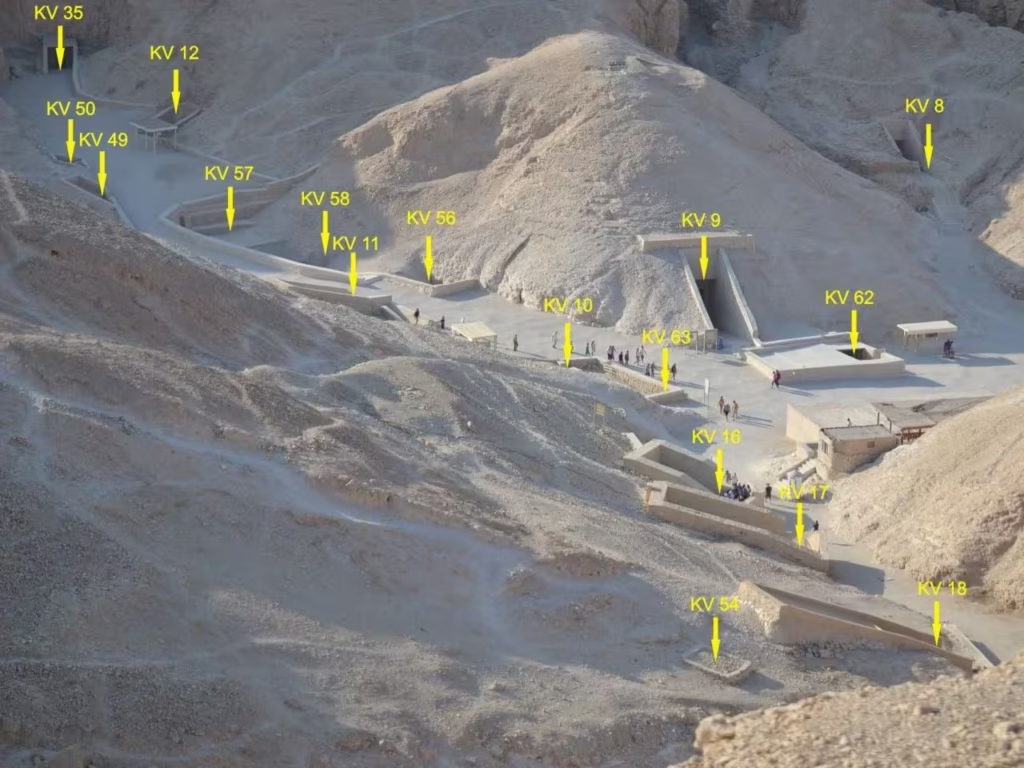
The Tomb of Tutankhamun (King Tut) – KV62 is one of the most famous discoveries in the entire Valley of the Kings and plays a major role in understanding What Is The Egyptian Valley Of The Kings today. Unlike many other royal tombs, this one was found almost intact in 1922, revealing a hidden world of golden treasures, ceremonial objects, and the preserved burial chamber of a young pharaoh.
What makes this tomb so special is not its size, but its condition. It is relatively small compared to other royal tombs, yet it contained thousands of artifacts that had remained untouched for over 3,000 years. When Howard Carter opened the burial chamber, the world suddenly gained a rare glimpse into ancient Egyptian royal life.
Inside the tomb, visitors can still see the mummy of Tutankhamun resting in his stone sarcophagus. The walls are decorated with simple but meaningful artwork, showing the journey into the afterlife. It may not be the largest tomb, but it is arguably the most important archaeological discovery in Egypt.
Even today, KV62 attracts travelers from all over the world, making it a key highlight for anyone exploring the Valley of the Kings and its incredible history.
“The Tomb of Seti I (KV17) is one of the most beautifully decorated burial chambers in the Valley of the Kings, offering a deeper understanding of What Is The Egyptian Valley Of The Kings and its artistic and religious importance. Often considered one of the most complex tombs ever built, KV17 stretches deep into the limestone cliffs, filled with long corridors, detailed carvings, and brightly painted ceilings.
What makes this tomb stand out is its incredible level of detail. Every wall is covered with scenes from sacred texts, including the Book of Gates and the Book of the Dead, which were meant to guide the pharaoh safely through the underworld. The colors inside are still surprisingly vivid, even after thousands of years, giving visitors a rare glimpse into ancient Egyptian craftsmanship.
Unlike the simpler tombs, Seti I’s burial place feels almost like an underground temple. The corridors are carefully aligned, and the artwork becomes more detailed as you move deeper inside, symbolizing the journey toward eternity.
For many travelers, KV17 is one of the highlights of the valley. It shows not just the power of a pharaoh, but also the extraordinary skill of ancient artisans who turned stone into a spiritual masterpiece.
Tomb of Ramesses III (KV11)
The Tomb of Ramesses III (KV11) is one of the most impressive royal burial sites that helps explain What Is The Egyptian Valley Of The Kings and its importance as a resting place for powerful pharaohs. Known for its long corridors and richly decorated walls, KV11 reflects both the strength and ambition of Ramesses III, one of Egypt’s last great rulers of the New Kingdom.
As you enter the tomb, the passage gradually slopes downward, leading you through a series of decorated halls filled with religious scenes and protective symbols. The artwork tells stories of gods, battles, and the pharaoh’s journey into the afterlife, showing how deeply spiritual beliefs were connected to royal life.
One of the most striking features of this tomb is its detailed ceiling paintings, which still display hints of original colors. The deeper chambers become more symbolic and complex, designed to guide and protect the king in his eternal journey.
Visitors exploring KV11 often notice how grand yet personal it feels. It is not just a burial site, but a carefully designed spiritual path carved into stone, showing how ancient Egyptians combined art, religion, and architecture in one powerful space within the Valley of the Kings.
Tomb of Ramesses VI (KV9)
The Tomb of Ramesses VI (KV9) is one of the most visually striking burial sites in the Valley of the Kings, offering a powerful insight into What Is The Egyptian Valley Of The Kings and its artistic depth. This tomb is famous for its long, beautifully decorated corridors that lead deep into the mountain, creating a sense of mystery and spiritual journey as you move inward.
What makes KV9 truly remarkable is its ceiling decoration. One of the most famous features is the astronomical ceiling, painted with stars and celestial scenes that represent the journey of the sun god through the night sky. It reflects how ancient Egyptians viewed death not as an end, but as a transition into another cosmic cycle.
The walls are covered with detailed scenes from sacred texts, guiding the pharaoh through the underworld. Even though Ramesses VI’s tomb was later reused and partially damaged in ancient times, much of its artwork still survives, giving visitors a powerful visual experience.
Walking inside KV9 feels like entering a sacred map of the universe carved into stone. It’s one of those places where history, religion, and art come together in a way that leaves a lasting impression on every traveler exploring the Valley of the Kings.
Best Tombs in the Valley of the Kings
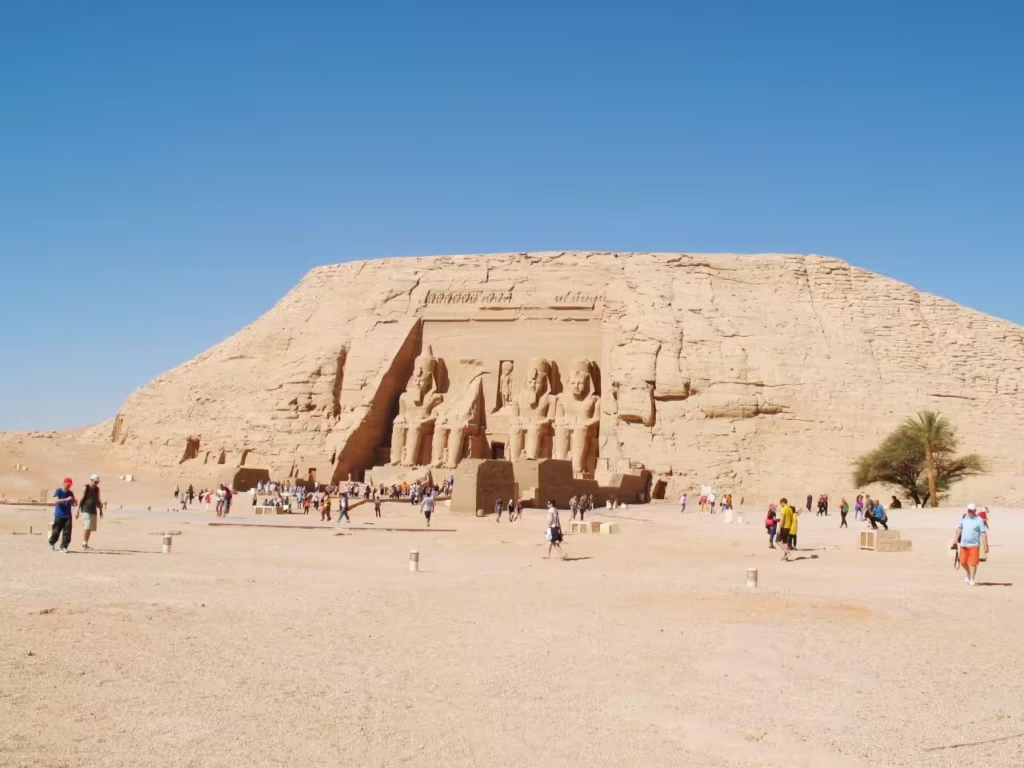
The best tombs in the Valley of the Kings offer a deeper understanding of What Is The Egyptian Valley Of The Kings and why it continues to fascinate travelers from around the world. Each tomb has its own story, design, and level of preservation, but some stand out for their beauty, history, and artistic detail.
One of the most famous is Tutankhamun’s tomb, known for its discovery in nearly intact condition and its incredible treasures. Seti I’s tomb is another highlight, admired for its long corridors and finely detailed religious artwork. Ramesses VI also draws attention with its astronomical ceiling and symbolic designs that reflect ancient beliefs about the universe and the afterlife.
What makes these tombs so special is not only their historical importance but also the experience of walking through them. Each passage feels like a journey deeper into ancient thought, where every painting and inscription had a purpose.
For many visitors, exploring these tombs becomes the highlight of their trip to Luxor. It’s a rare chance to see how pharaohs were honored, remembered, and prepared for eternity inside one of Egypt’s most extraordinary archaeological sites.
Inside the Valley of the Kings: Architecture and Meaning
Inside the Valley of the Kings, the architecture reveals much more than stone corridors—it reflects the deeper meaning behind What Is The Egyptian Valley Of The Kings and how ancient Egyptians viewed life, death, and eternity. Each tomb was carefully designed not just as a burial place, but as a spiritual pathway guiding the pharaoh into the afterlife.
As you move through the underground passages, you notice how the structure becomes more symbolic the deeper you go. Entry corridors often represent the journey from life to death, while inner chambers reflect the transition into rebirth. Walls are filled with protective spells, gods, and sacred imagery meant to ensure safe passage for the ruler’s soul.
One interesting detail is how no two tombs are exactly the same. Some are long and complex with multiple bends, while others are more direct but richly decorated. This variation shows how different pharaohs wanted to express their power and beliefs in unique ways.
Standing inside these spaces today gives travelers a powerful sense of connection. It’s not just about architecture—it’s about understanding how deeply the ancient Egyptians believed in the afterlife, and how they shaped entire landscapes to reflect that belief.
Royal Tomb Architecture
Royal tomb architecture in the Valley of the Kings reveals a deeper understanding of What Is The Egyptian Valley Of The Kings and how ancient engineers designed these underground masterpieces. Unlike traditional structures built above ground, these tombs were carved directly into limestone cliffs, creating hidden sanctuaries meant to protect pharaohs for eternity.
The design usually begins with a descending corridor that leads deeper into the mountain. This path was not only practical but symbolic, representing the journey from life into the afterlife. Along the way, travelers would pass through chambers filled with inscriptions, religious scenes, and protective symbols meant to guide and guard the soul.
One fascinating detail is how architecture evolved over time. Earlier tombs were simpler and more direct, while later ones became increasingly complex, with multiple corridors, side chambers, and decorative halls. This evolution reflects growing beliefs about the afterlife and the importance of spiritual protection.
Even today, walking through these tombs feels like entering a carefully planned spiritual map. The precision of the design shows how advanced ancient Egyptian engineering was, blending art, religion, and architecture into one unforgettable experience inside the Valley of the Kings.
Tomb Design Evolution
The tomb design evolution in the Valley of the Kings reveals how deeply connected architecture was to beliefs behind What Is The Egyptian Valley Of The Kings. Over centuries, the way tombs were built changed dramatically, reflecting shifts in religion, security concerns, and royal ambition.
Early tombs were relatively simple, with straight corridors leading directly to burial chambers. These designs focused mainly on function—protecting the pharaoh and guiding them into the afterlife. But as time passed, tombs became far more complex. Later rulers introduced multiple passageways, hidden turns, and deeper chambers, almost like an underground maze carved into the limestone.
This evolution was not random. It was closely tied to the idea of protecting royal treasures from tomb robbers, which became a serious concern in ancient Egypt. At the same time, religious symbolism grew stronger, and every wall, corner, and ceiling space began to carry meaning related to gods, rebirth, and cosmic journeys.
Walking through these tombs today, you can actually feel this transformation. Some passages feel simple and direct, while others feel carefully planned and ceremonial. It’s this evolution that makes the Valley of the Kings such a powerful place, showing how architecture and belief developed together over thousands of years.
Tomb Structure and Layout
The tomb structure and layout in the Valley of the Kings reflect a carefully planned design system that helps explain What Is The Egyptian Valley Of The Kings in a more practical way. These underground tombs were not random tunnels—they were engineered with purpose, symbolism, and protection in mind.
Most tombs begin with a sloping entrance corridor that leads deep into the rock. This gradual descent represents the journey from the world of the living into the underworld. Along the way, the passage may change direction several times, a clever design thought to confuse tomb robbers and protect the burial chamber inside.
As visitors move deeper, the structure becomes more complex. Side chambers, pillared halls, and decorated rooms often appear before reaching the main burial chamber. Each section had a specific role, whether for storing grave goods, performing rituals, or protecting sacred objects placed with the pharaoh.
What makes this layout so impressive is how consistent yet unique it is across different tombs. Every ruler followed the same general concept, but each design was adapted to reflect personal beliefs and status. This combination of engineering and spirituality is what makes the Valley of the Kings such an extraordinary achievement in ancient architecture.
Engineering Marvels
The engineering marvels of the Valley of the Kings show just how advanced ancient builders were when designing burial sites that reflect What Is The Egyptian Valley Of The Kings. Carving deep into solid limestone without modern tools required incredible skill, planning, and understanding of the rock structure.
Engineers carefully studied the cliffs before beginning construction, choosing locations that were stable enough to prevent collapse yet hidden enough to protect royal tombs. Once the carving began, workers used simple tools like chisels and copper instruments, yet they managed to create long corridors, steep passageways, and perfectly aligned chambers deep underground.
One of the most impressive aspects is how they controlled airflow, lighting, and structural balance inside these enclosed spaces. Even though the tombs are thousands of years old, many remain stable today, proving the precision of their construction methods.
These engineering achievements were not just practical—they were deeply symbolic. Every angle, corridor, and chamber was designed with spiritual meaning in mind, guiding the pharaoh through his journey into the afterlife. This blend of science, art, and belief is what makes the Valley of the Kings one of the greatest architectural achievements of the ancient world.
Hidden Chambers
Hidden chambers are one of the most mysterious aspects of the Valley of the Kings, and they add another layer of meaning to What Is The Egyptian Valley Of The Kings. These secret spaces were often built to protect valuable burial goods, sacred objects, or even to confuse tomb robbers who searched for treasures in ancient times.
In many tombs, what looks like a final burial room is not always the end of the structure. Archaeologists have discovered small side rooms, blocked passages, and unexplored areas that suggest there is still more to uncover beneath the desert. Some chambers were intentionally sealed, while others may have been left unfinished as construction plans changed over time.
The idea of hidden spaces also reflects ancient Egyptian beliefs about the afterlife. These chambers were not just physical rooms—they were part of a spiritual journey designed to guide and protect the pharaoh’s soul through the underworld. Every hidden corridor and sealed doorway had meaning beyond its physical purpose.
Even today, modern technology continues to reveal new possibilities inside these tombs. Ground-penetrating scans and advanced imaging suggest that some secrets of the Valley of the Kings may still be waiting to be discovered, keeping the mystery alive for future generations.
Artistic Masterpieces
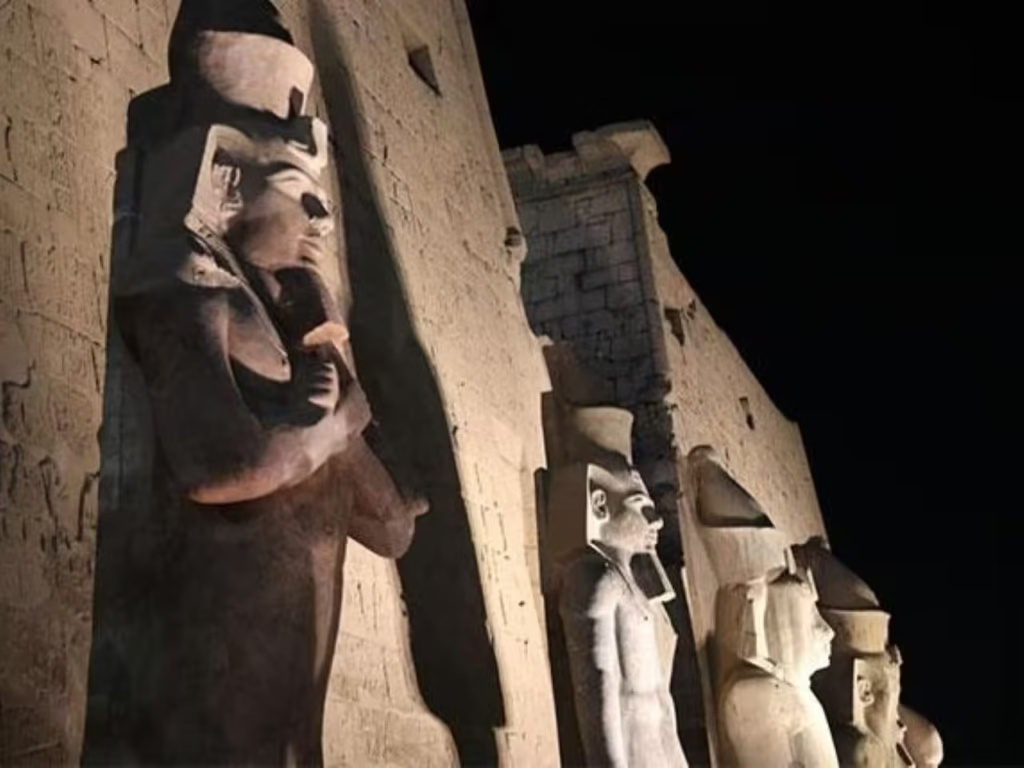
The artistic masterpieces inside the Valley of the Kings reveal the deeper meaning behind What Is The Egyptian Valley Of The Kings and why it is considered one of the greatest cultural treasures in the world. These tombs are not just burial places—they are galleries of ancient art created to honor pharaohs and guide them into the afterlife.
Every wall is covered with detailed paintings, carved symbols, and sacred imagery that tells stories of gods, rituals, and the journey of the soul. The colors, especially in well-preserved tombs, remain surprisingly vivid even after thousands of years, showing the incredible skill of ancient Egyptian artists.
What makes these artworks so special is their purpose. They were not created for decoration alone but as part of a spiritual system. Each scene had meaning, whether it was protecting the pharaoh, offering guidance, or ensuring rebirth in the next world.
Visitors often find themselves slowing down inside the tombs, noticing small details they might otherwise miss. From delicate brushwork to powerful symbolic scenes, the artistic expression in the Valley of the Kings turns stone walls into timeless stories carved in silence.
Wall Art and Funerary Texts
The wall art and funerary texts inside the tombs give deep insight into What Is The Egyptian Valley Of The Kings and how ancient Egyptians prepared for eternity. These walls were never meant to be simple decoration—they were sacred instructions, carefully carved and painted to guide the pharaoh safely through the afterlife.
As you walk through the corridors, you’ll notice scenes of gods, ritual ceremonies, and symbolic journeys that represent protection and rebirth. The colors, though faded in some areas, still carry a powerful sense of meaning and craftsmanship. Every detail was intentional, from the placement of figures to the direction of the sacred texts.
One of the most important elements found here is the collection of religious writings, often taken from ancient funerary texts like the Book of the Dead. These inscriptions were believed to provide spells, prayers, and guidance for navigating the underworld and overcoming challenges after death.
What makes this so fascinating for visitors is how alive the walls still feel. Even after thousands of years, the combination of imagery and writing transforms the tombs into a visual storybook of ancient beliefs, showing how deeply spirituality shaped every part of Egyptian royal life.
Sacred Texts
The sacred texts found inside the tombs are one of the most powerful elements that explain What Is The Egyptian Valley Of The Kings and why it held such deep spiritual importance for ancient Egyptians. These inscriptions were not written for decoration—they were believed to hold real power, guiding and protecting the pharaoh in the journey to the afterlife.
As you move through different tombs, you’ll notice long passages of hieroglyphs covering the walls. These texts often come from ancient religious compilations like the Book of the Dead, the Book of Gates, and other funerary writings. Each section was carefully placed to match specific stages of the soul’s journey after death.
What makes these writings so fascinating is how practical they were believed to be. They included spells for protection, instructions for overcoming dangers in the underworld, and prayers to ensure rebirth. For ancient Egyptians, these were not symbolic stories—they were essential tools for eternity.
Even today, standing inside these chambers and seeing the texts carved into stone creates a powerful connection to the past. It feels like the walls themselves are speaking, preserving beliefs that shaped one of the greatest civilizations in history.
Sacred Symbolism
Sacred symbolism is at the heart of every tomb, and it gives deeper meaning to What Is The Egyptian Valley Of The Kings beyond its physical structure. Nothing inside these burial chambers was created randomly—every color, shape, and image carried a spiritual message meant to guide and protect the pharaoh in the afterlife.
As you walk through the tombs, you’ll notice repeated symbols like scarabs, eyes, snakes, and solar boats. Each one represented powerful ideas such as rebirth, protection, divine power, and the journey of the sun god across the sky. These symbols were believed to act as spiritual tools, helping the king overcome dangers in the underworld.
The placement of these symbols was also important. For example, ceilings often represent the sky or cosmos, while lower walls show the earthly journey into death. This layered design created a visual map of the afterlife, something unique to ancient Egyptian belief systems.
Even today, visitors are often amazed by how intentional everything feels. The Valley of the Kings is not just a burial site—it is a carefully designed spiritual world carved into stone, where symbolism transforms architecture into a story of eternity and rebirth.
Artistic Brilliance
The artistic brilliance found throughout the Valley of the Kings is one of the strongest reasons travelers ask What Is The Egyptian Valley Of The Kings and why it still feels so alive today. Every tomb is filled with a level of creativity and detail that reflects not just skill, but deep spiritual devotion.
Artists in ancient Egypt worked under strict religious guidance, ensuring that every scene served a purpose. Figures of gods, protective symbols, and carefully painted rituals were designed to support the pharaoh’s journey into eternity. What makes it even more impressive is how balanced the artwork feels—both structured and deeply expressive at the same time.
As you move through different tombs, you begin to notice how styles vary between rulers. Some tombs feature bold, dramatic scenes, while others focus on fine, delicate details. This variation shows how artistic expression evolved over centuries while still following sacred traditions.
Even today, the colors and lines that survive inside these chambers leave visitors in awe. It’s not just ancient decoration—it’s a complete visual language that tells the story of belief, power, and eternity carved into the heart of the Valley of the Kings.
The Tombs and the Treasures
The tombs and the treasures of the Valley of the Kings offer a final glimpse into What Is The Egyptian Valley Of The Kings and why it continues to capture the imagination of travelers worldwide. These burial chambers were once filled with objects meant to accompany pharaohs into the afterlife, reflecting both wealth and deep spiritual belief.
Inside the tombs, archaeologists discovered items such as golden jewelry, decorated coffins, ritual furniture, and everyday objects carefully placed to support the king in eternity. Even though many treasures were removed over time or lost to ancient tomb robbers, what remains still shows the incredible craftsmanship of ancient Egypt.
Each artifact tells a story. Some represent royal power, while others reflect religious rituals or personal items that once belonged to the pharaoh. Together, they create a picture of how ancient Egyptians prepared for life after death with great care and devotion.
For visitors, even seeing the empty chambers today is powerful. The walls, carvings, and remaining traces of treasure placement still give a sense of richness and mystery, reminding everyone that the Valley of the Kings was once a sacred resting place for Egypt’s greatest rulers.
Facts About the Valley of the Kings
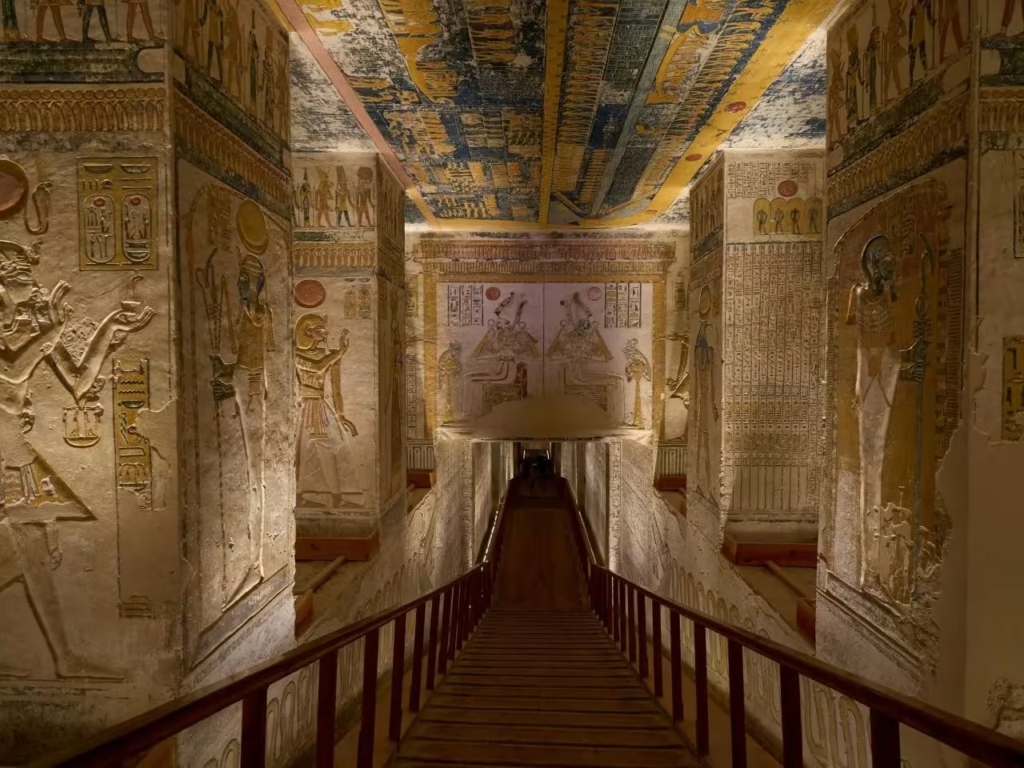
Understanding What Is The Egyptian Valley Of The Kings becomes even more interesting when you look at the surprising facts hidden behind its cliffs and tombs. This ancient burial ground is not just a single valley, but a complex network of royal resting places that continued to evolve for centuries.
One of the most fascinating facts is that the valley contains over 60 known tombs, with new discoveries still reshaping what we know today. Each tomb was carefully designed with corridors, chambers, and symbolic carvings meant to guide the pharaoh safely into the afterlife. Some tombs are simple and unfinished, while others stretch deep into the rock with richly decorated walls.
Another interesting detail is that the Valley of the Kings was used for nearly 500 years, mainly during the New Kingdom period of ancient Egypt. Many travelers are surprised to learn that it was not a hidden city, but a sacred necropolis guarded and respected by ancient workers and priests.
Even today, ongoing research continues to reveal new insights about burial practices, tomb construction, and ancient beliefs. This makes the valley not just a historic site, but a living archaeological story that still fascinates historians and visitors alike.
Best Time to Visit What Is The Egyptian Valley Of The Kings
Choosing the right time to visit What Is The Egyptian Valley Of The Kings can completely change your experience, especially under the strong Upper Egypt sun. The best months are generally from October to April, when the weather in Luxor is much cooler and more comfortable for exploring outdoor sites and walking between tomb entrances.
Early mornings are especially recommended, as the valley opens with softer light and fewer crowds. Many travelers don’t realize how intense the midday heat can become, making it harder to fully enjoy the detailed wall carvings and underground chambers. Visiting early also gives you a calmer atmosphere, allowing you to take your time inside the tombs without rushing.
If you’re planning a broader Egypt trip, combining Luxor with nearby Nile experiences can make the journey even more memorable. Some travelers like to balance historical visits with relaxing boat activities in other regions, such as the Red Sea area, to break up the intensity of ancient sites.
Ultimately, timing your visit well helps you experience the Valley of the Kings not just as a historical landmark, but as a living journey through ancient Egypt’s royal past.